
+61493765882
+61493765882
The Florist Coach Blog

The Florist Coach Blog
Practical advice, real talk and business insights for florist business owners who are ready to grow.
Practical advice, real talk and business insights for florist business owners who are ready to grow.

Mastering Florist Overload: Balance Business Tasks

Are You Sarah in the Pie Shop?
What The E-Myth Can Teach Florists
Are You Sarah in the Pie Shop? What The E-Myth Can Teach Florists
In The E-Myth Revisited, Michael E. Gerber tells the story of Sarah, a woman who loves making pies but discovers that loving the technical work and running a successful business are two very different things.
Sarah is brilliant at making pies.
She loves making them. People love buying them. She has a skill people value, so eventually she does what so many talented people do.
She opens a business.
And that’s where everything changes.
Suddenly, she isn’t just making pies anymore.
There are customers to serve, stock to buy, money to manage, paperwork to complete, problems to solve and another day to prepare for before this one has even finished.
The thing she once loved becomes the thing she starts to resent.
Gerber uses Sarah’s story to illustrate one of the biggest traps in small business: being technically good at the work does not automatically mean you know how to build a business around that work.
Sound familiar?
Replace the Pies With Flowers
This is why Sarah’s story reminds me so much of florists.
You started because you were good with flowers.
Maybe you worked for another florist first. Maybe you began from home. Maybe friends and family kept telling you how talented you were.
Eventually you thought:
I could do this myself.
So you did.
And suddenly you weren’t just a florist anymore.
You were responsible for ordering flowers, pricing, quoting weddings, answering emails, managing staff, paying wages, doing deliveries, handling complaints, updating the website, posting on social media, reconciling accounts, cleaning buckets and somehow still finding time to make tomorrow’s orders.
You became the florist.
The manager.
The marketer.
The bookkeeper.
The salesperson.
The HR department.
And the owner.
That’s the trap.
You may have gone into business because you loved creating with flowers, but eventually creating with flowers becomes only one of dozens of jobs you’re responsible for.
Being a Great Florist and Building a Great Florist Business Are Different Skills
One of the central ideas in The E-Myth Revisited is what Gerber calls the Fatal Assumption: believing that because you understand the technical work of a business, you automatically understand how to run a business that does that technical work.
Floristry is a perfect example.
Being able to create a beautiful arrangement does not automatically teach you how to calculate labour properly.
Being brilliant with customers does not teach you how to manage cash flow.
Knowing exactly how a bouquet should look does not teach you how to train another florist to produce work consistently.
Having incredible creative instincts does not automatically create systems.
These are different skills.
And eventually, the business owner has to learn them.
Because the better your business becomes at attracting customers, the more dangerous it becomes if everything still depends on you.
More orders can simply create more work.
More weddings can create more pressure.
Another team member can create more questions.
Growth without structure doesn’t create freedom.
It creates a bigger version of the same problem.

The Technician Takes Over
Gerber talks about three different roles that exist within a business owner: the Entrepreneur, the Manager and the Technician.
The Entrepreneur thinks about where the business is going.
The Manager creates order, structure and consistency.
The Technician does the work.
For florists, the Technician can easily take over.
She wants to make the bouquet herself because it will be quicker.
She’ll stay back and finish the wedding flowers because she knows exactly how they should look.
She’ll fix the website order.
She’ll deal with the difficult customer.
She’ll place the flower order because explaining it to someone else feels harder than simply doing it herself.
And every time she says:
“I’ll just do it.”
The business becomes a little more dependent on her.
That might solve today’s problem.
But it doesn’t build tomorrow’s business.
What Happens If You Are Always the Answer?
Imagine your team working tomorrow without you.
An online order arrives.
A customer complains.
A delivery needs changing.
A team member calls in sick.
A wedding flower order arrives short.
A supplier substitutes a product.
Do they know what to do?
Or does somebody immediately call you?
That question tells you a lot about how developed your business really is.
Because the goal isn’t to create a florist business where nothing ever goes wrong.
That’s impossible.
The goal is to create a business where you don’t have to personally solve everything that goes wrong.
That requires systems.
Clear roles.
Training.
Financial visibility.
Processes.
And people who are trusted to make decisions.

Work on the Florist Business, Not Only in It
This is probably one of the best-known ideas associated with The E-Myth: the difference between working in your business and working on your business. EMyth still describes this as a defining idea behind its approach to small business.
Working in your florist business is:
Making arrangements.
Answering phones.
Processing orders.
Cleaning buckets.
Receiving flowers.
Packing deliveries.
Answering emails.
Putting out today’s fires.
Working on your florist business looks very different.
It means asking:
Why did that problem happen?
Could we create a process so it doesn’t happen again?
Could somebody else take responsibility for this?
Does the team know exactly what is expected of them?
Are we pricing this work properly?
Are our margins where they need to be?
What numbers should I be watching?
Where are we losing money?
What does this business need to look like twelve months from now?
Both types of work matter.
You are still a florist.
There will always be times when you need to work inside the business.
But if you spend all of your time working in the business, nobody is actually building the business.
Systems Aren’t About Removing the Creativity
This is where some florist business owners resist the idea of systems.
Floristry is creative.
Every arrangement is different.
Every wedding is different.
Flowers are seasonal.
Customers change their minds.
Things happen.
So surely you can’t systemise a florist business?
You absolutely can.
You’re not trying to systemise creativity.
You’re systemising everything around the creativity.
How an order is processed.
How wedding enquiries are handled.
How flowers are ordered.
How incoming stock is checked.
How deliveries are scheduled.
How complaints are managed.
How staff are trained.
How pricing is calculated.
How opening and closing procedures work.
How customer information is recorded.
How the business handles a team member calling in sick.
The more predictable parts of the business you can systemise, the more space you create for the creative work that actually needs your judgement and talent.
Your Goal Doesn’t Need to Be a Florist Empire
Building a business that operates without relying on you every minute of the day doesn’t mean you need ten stores.
It doesn’t mean franchising.
It doesn’t mean becoming a huge company.
And it definitely doesn’t mean you need to stop arranging flowers.
You might want one beautiful shop, a capable team and enough profit to leave at 3pm.
You might want to take four weeks off every year without answering your phone.
You might want to spend two days a week creating and the rest of your time working strategically.
You might want to grow substantially.
Or you might simply want the business you already have to work better.
The point isn’t size.
The point is choice.
Your business should eventually support the life you want rather than requiring your constant presence simply to keep operating.
Don’t Become Sarah
Sarah didn’t open a pie shop because she wanted to eventually hate making pies.
And florists don’t start florist businesses because they want to eventually dread Valentine’s Day, Mother’s Day or wedding season.
But it happens.
The creative work you once loved gets buried underneath responsibility.
You become so busy running around inside the business that you stop having the time or energy to actually lead it.
And that is why systems, profitability, leadership and team development matter.
Not because we want to remove the creativity from floristry.
Quite the opposite.
We want to build businesses strong enough that you can enjoy the creativity again.
A business where your team knows what to do.
Where processes don’t live entirely inside your head.
Where the numbers allow you to employ the right people.
Where you can step away without everything stopping.
And where you can walk behind the bench and create because you want to.
Not because you’re the only person who can.
That is a very different type of florist business.
And a much better one to own.
Want to Read The E-Myth Revisited?
If Sarah’s story sounds even slightly familiar, The E-Myth Revisited: Why Most Small Businesses Don’t Work and What to Do About It by Michael E. Gerber is well worth reading.
Gerber’s examples aren’t written specifically for florists, but the lessons around systems, leadership and moving beyond being the person who does everything translate incredibly well to our industry.
Read The E-Myth Revisited
Official EMyth book page
Ready to Build a Florist Business That Relies Less on You?
If Sarah’s story feels a little too familiar, that’s exactly the kind of work we do at The Florist Coach.
We work with florist business owners on the numbers, systems, team and structure behind the flowers, so the business doesn’t have to depend on you doing everything yourself.
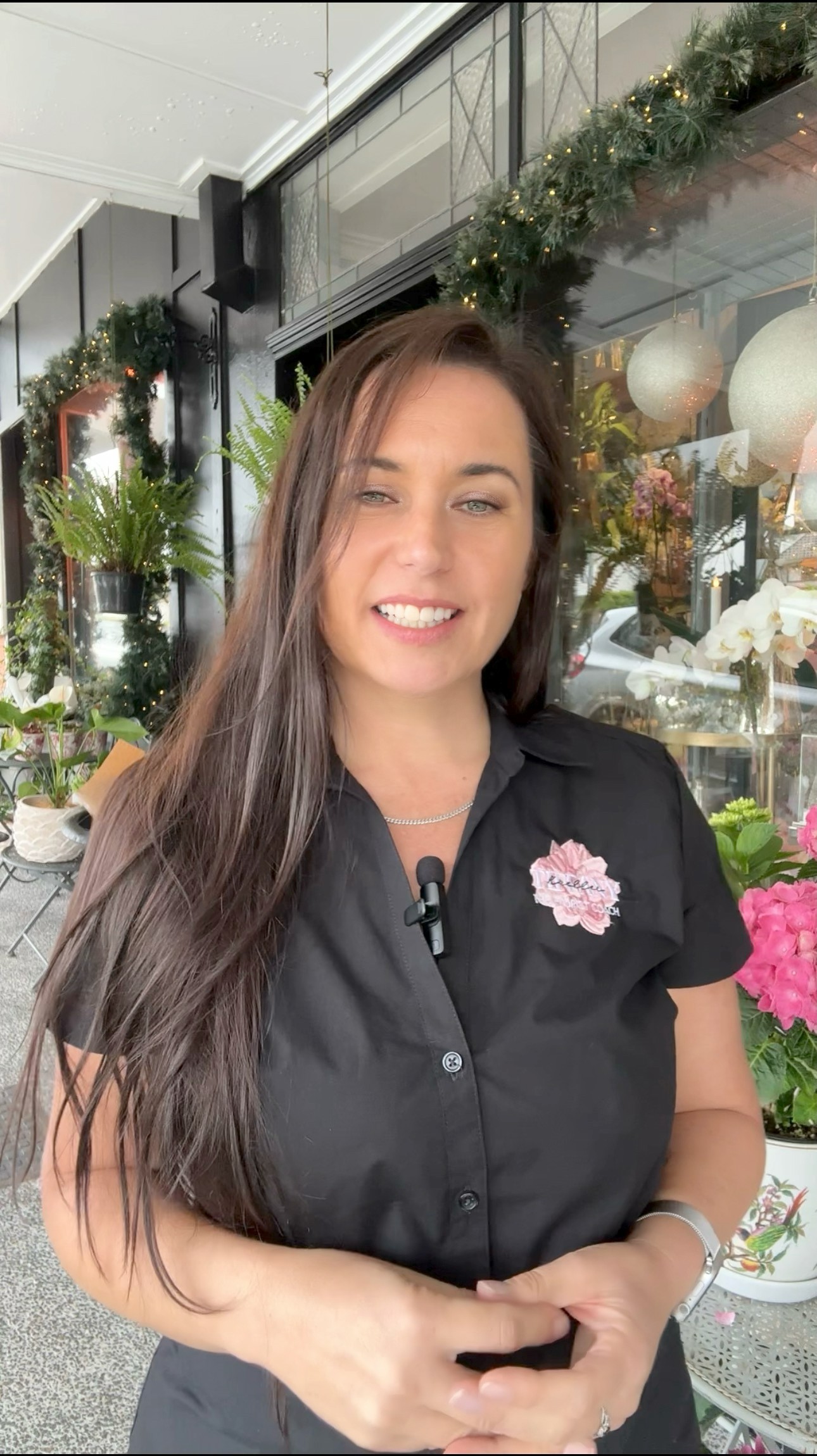

Straight Talk for Florists. No Fluff. Just Results.
Join a community of retail florists getting weekly tips on profit, pricing, and the business side of flowers — because passion alone doesn't pay the bills.

Growth
Helping florists learn, grow and master their business
Integrity
Helping florists learn, grow and master their business
Abundance
We believe there's enough success for every florist
Growth
Helping florists learn, grow and master their business
Integrity
Helping florists learn, grow and master their business
Abundance
We believe there's enough success for every florist
Helping florists build profitable businesses they love.
FOLLOW US


COMPANY
CUSTOMER CARE
LEGAL
FOLLOW US
COMPANY
CUSTOMER CARE
LEGAL
ABN: 49 823 223 420
Copyright 2026. The Florist Coach. All Rights Reserved.